Sonam & Durga: Voices That Matter Through AI
eVidyaloka|March 2026
eVidyaloka|March 2026
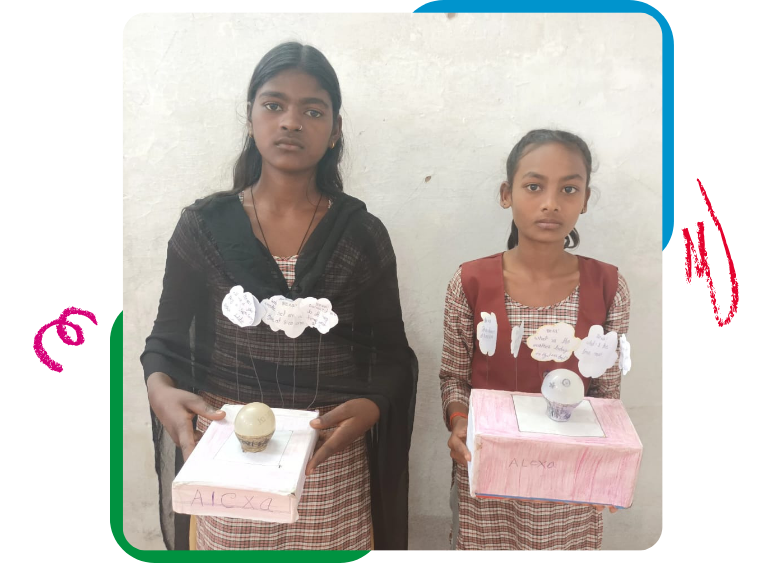
At GHS Baghadih in Madhya Pradesh, a quiet yet powerful transformation unfolded as two young students, Sonam Rawat and Durga, stepped forward to present their Artificial Intelligence project, “How AI is Changing the Way We Live.” What appeared on the surface as a simple classroom presentation carried within it a story of courage, persistence, and breaking deeply rooted barriers.
For Sonam and Durga, the journey into AI was not just about learning a new subject—it was about stepping into a space where they were not always expected to belong. In their village, opportunities for girls to explore technology, coding, or emerging fields like Artificial Intelligence are still limited, often overshadowed by traditional expectations. When they first began working on their project, they were met with doubt, not only from society but even from within their own circles.
“Why do girls need to learn about Alexa?” a relative once questioned Durga.
But instead of retreating, that question became a turning point.
With guidance and encouragement from their volunteer teacher through eVidyaloka, the two girls began shaping their ideas into something tangible. Without access to devices like Alexa at home, they turned to what was available—YouTube videos, classroom discussions, and their own imagination. They carefully observed how AI assistants respond, wrote scripts, and rehearsed tirelessly, transforming limitations into learning opportunities.
Their project took the form of a dialogue-based presentation—a small play that demonstrated how AI-powered assistants like Alexa can support everyday life. From helping students with their studies to providing weather updates and assisting visually impaired individuals, Sonam and Durga showcased the practical, human side of technology. What made their presentation remarkable was not just the content, but the conviction with which they delivered it.
On the day of the presentation, something shifted.
Standing in front of their peers, they spoke with clarity and confidence, breaking down complex ideas into relatable examples. The hesitation that once surrounded them was replaced by a strong, assured voice. Their performance was not just informative—it was inspiring. As they concluded, the room filled with applause, not just for the project, but for the journey it represented.
For the first time, their voices were not only heard—they were celebrated.
This moment marked more than the completion of a school assignment. It was a milestone in self-belief, a step toward challenging stereotypes, and a powerful example of what happens when opportunity meets determination. Through initiatives like the BRAIN (Building Rural Artificial Intelligence Network) program, students like Sonam and Durga are not just learning about technology—they are redefining who gets to be part of its future.
Their story reminds us that education is not only about knowledge—it is about empowerment. It is about creating spaces where every student, regardless of background or gender, feels capable of exploring, questioning, and leading.
As classrooms continue to evolve, stories like theirs quietly signal a larger change taking place—one where young girls from rural communities are not just participants in the world of technology, but emerging voices that truly matter.

Explore how quality education empowers children to break barriers and reach their full potential.
Discuss innovative teaching methods and approaches used by education NGOs to foster a love for learning.
Shed light on the dedicated educators, staff, and volunteers who drive the NGO's educational initiatives.
